Skip to content
Newsletter
SoftwareIn development

DawnOS

The GNU/Linux distribution for Divine D., based on Mobian and Debian. A maintained kernel and drivers for the board, standard Linux user space, and Plasma Mobile or Phosh as the touch interface. Security and privacy are specified as engineering requirements and verified before they are claimed.

Native Linux

What native Linux means

DawnOS runs directly on the hardware. The Linux kernel boots on the RK3588S and drives every device itself: display, GPU, cameras, audio, radios and sensors. There is no compatibility layer and no second operating system underneath.

Applications are ordinary Linux programs, the same software that runs on Linux desktops and servers, installed from the Debian and Mobian repositories. You can open a terminal, read the logs, rebuild a package or replace any part of the system you have the source for.

  • One kernelLinux 7.1 with Dawndrums patches, drivers for every part of the board
  • Standard user spacesystemd, PipeWire, NetworkManager, ModemManager, BlueZ, Mesa
  • Open driversPanthor on the GPU, Rocket on the NPU, brcmfmac on Wi-Fi
  • Your systemroot access, packages, logs and source

Foundation

Built on Debian and Mobian

DawnOS is based on Mobian and the Debian ecosystem and repositories.

Debian

One of the oldest community-run distributions, known for its stability. Packages go through a long testing process before a stable release, and stable releases get security updates for years. Tens of thousands of packages are a command away.

Mobian

Debian for mobile devices: phone-friendly packaging of the touch interfaces, telephony and mobile services, built on Debian repositories.

DawnOS

Leverages that stability and adds what Divine D. needs: support for the board's hardware, performance optimisation for the RK3588S, and fixes for instability as development goes.

Touch interface

Plasma Mobile and Phosh

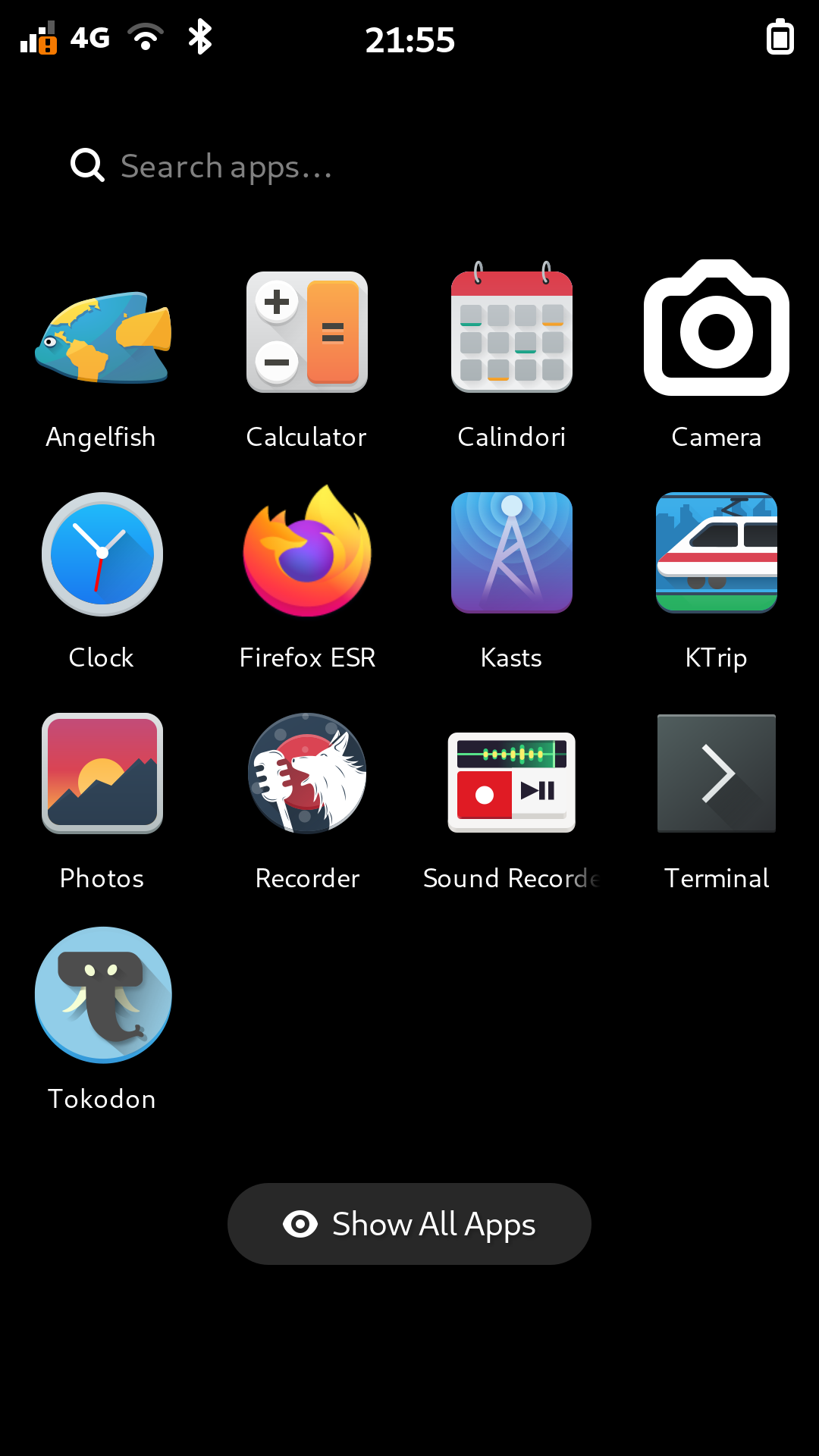
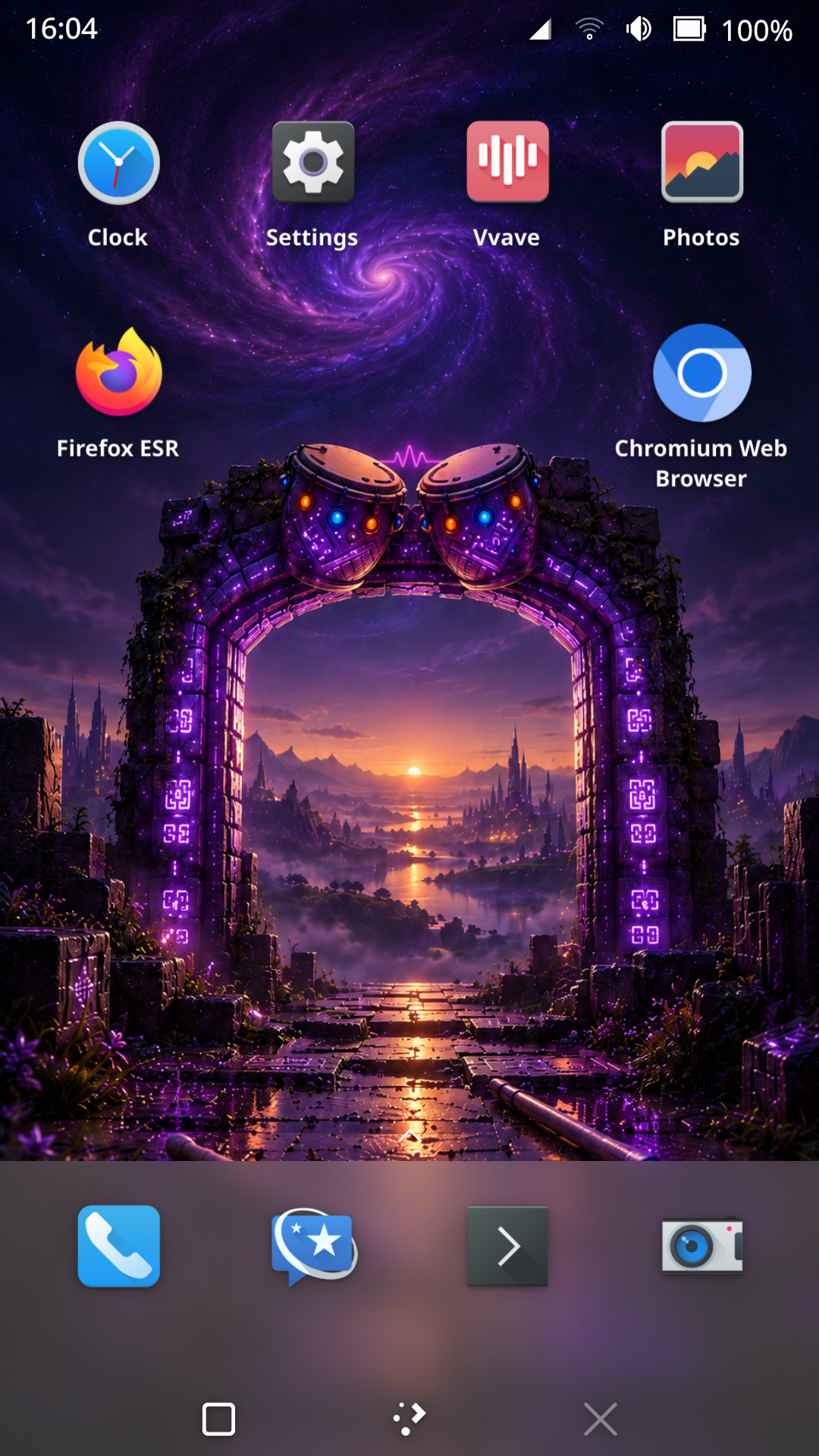
Two mature mobile interfaces, both on Wayland and GPU accelerated. Plasma Mobile comes from KDE and Phosh from GNOME, and each has its own components and apps. DawnOS optimises the system for the ecosystem of the interface you choose, so each one runs with the services and settings it was designed for.
Plasma Mobile on Divine D.

Plasma Mobile

KDE's mobile interface, built with Qt and Kirigami. Shown in the MVP video on the home page.

Phosh on Divine D.

Phosh

The GNOME-based phone shell, built with GTK and used across mobile Linux distributions.

Software layers

From the boot ROM to applications

Every layer of DawnOS on Divine D., where it comes from, and where the binary firmware is. Open-source code is marked Upstream or Dawndrums. The binaries are listed in the firmware inventory.
  1. 07

    Applications

    • divine-cameraCamera app based on KDE Plasma CameraDawndrums
    • Debian and Mobian applicationsInstalled from the repositoriesUpstream
  2. 06

    Touch interface

    • Plasma MobileKDEUpstream
    • PhoshGNOME-basedUpstream
  3. 05

    Dawndrums services

    • dd-audiod · dd-batteryd · dd-powerdCall audio, battery, powerDawndrums
    • dd-sensord · dd-lorad · dd-agentdSensors, LoRa, system supervisionDawndrums
  4. 04

    Media and graphics

    • Mesa (Panthor, Vulkan)GPU driversUpstream
    • PipeWireAudio and video routingUpstream
    • libcamera and RKISP2 IPADawndrums fork with the Divine D. pipeline and tuningDawndrums
  5. 03

    Base system

    • Debian and MobianPackages, repositories, systemd, NetworkManager, ModemManager, BlueZUpstream
  6. 02

    Kernel

    • Linux 7.1Mainline kernelUpstream
    • Dawndrums patches and the Divine D. device treeDrivers not yet upstream, board supportDawndrums
    • Mali-G610 CSF firmwareLoaded by Panthor, from linux-firmwareBinary
    • Wi-Fi and Bluetooth firmware (BCM43752)Loaded by brcmfmac and the Bluetooth driverBinary
  7. 01

    Bootloader

    • U-BootDawndrums tree, fork of radxa/u-bootDawndrums
    • Trusted Firmware-A (BL31)Binary from rkbin or built from source, not yet recordedTo confirm
    • DDR init and SPL loader (rkbin)Rockchip binariesBinary
  8. 00

    Boot ROM

    • RK3588S boot ROMIn the SoC, not replaceableBinary

On the radio modules

Each radio runs its own firmware on its own processor, outside the RK3588S.

  • Cellular modem (SIM7600G-H)Baseband firmware, runs on the moduleBinary
  • LoRa (RAK3172)Module firmware, reflashable from Divine D. over UARTOpen source
Upstream
Open source, maintained upstream
Dawndrums
Open source, maintained by Dawndrums
Open source
Open source, third party
Binary
Binary-only, no source available
To confirm
Source not yet recorded in the firmware inventory

Dawndrums services

Daemons for Divine D. hardware

DawnOS adds a small set of system services that connect the board's hardware to the standard Linux stack.
dd-audiodVoice call audio bridge

Moves call audio between the cellular modem and PipeWire, following the call state that ModemManager reports over D-Bus.

dd-batterydBattery supervisor

Supervises the battery: charge level, charging and battery health.

dd-powerdPower management

Manages the power states of the device and its subsystems.

dd-sensordSensor management

Manages the light and proximity sensor and the IMU, and makes their readings available to the system.

dd-loradSub-GHz LoRa network daemon

Runs the LoRa link through the RAK3172 module and makes LoRa networking available to applications.

dd-agentdSystem supervisor

Supervises the Dawndrums services and the overall health of the system.

Architecture

Engineering constraints

Public development

Code Dawndrums owns is developed in public repositories; progress is recorded in the engineering log.

Security

Integrity of the boot chain, careful permissions and timely updates are design goals, verified before they are claimed.

Upstream interfaces

Kernel drivers and media paths built on mainline interfaces so the system can follow upstream Linux.

Goals

Development goals

These are goals of the project. Each one is reported as available only once it works on Divine D. and has been tested.

Security and privacy

  • Encrypted storage of user data
  • Verified boot chain
  • Strict application permissions
  • No tracking in the system or stock applications
  • Support for local, on-device AI models rather than cloud services

Performance and power

  • A lean kernel configuration for the board
  • Hardware-accelerated graphics and video decoding
  • CPU frequency scaling and power gating
  • Low-power suspend
  • No bloatware

Plan

How the work is organised

Core

Stable kernel and file system, drivers and firmware, a basic interface and package management, core security features.

Features

Essential applications, power management, connectivity.

Refinement

Testing, debugging, performance and energy optimisation, community feedback.

Newsletter

Follow DawnOS development

Major development news from Dawndrums, only when something important happens.

Dawndrums major development news: hardware, DawnOS and project milestones. A few emails a year, only when something important happens.

We send a confirmation email first (double opt-in). Nothing is sent until you confirm. See the privacy notice.